

Key Takeaways
- Follow the processing instruction for the exact film stock. Remjet is an important handling issue, but it is not the only difference between ECN-2 and C-41.
- Most everyday colour negative films use C-41. Kodak VISION3 motion-picture negatives are designed for ECN-2, including newer AHU versions made without remjet.
- CineStill 800T, 50D and 400D are sold for C-41 processing. Do not assume every cinema-derived or respooled film has the same instructions.
- Keep unidentified film protected from light. Do not unwind a roll, rub its surface or expose it to inspect the backing or edge markings.
- At Irohas Photo, C-41 Dev + Scan is A$17 per roll and ECN-2 Dev + Scan is A$18. Timing depends on the process and receiving lab.

ECN-2 vs C-41: The Quick Answer
C-41 and ECN-2 are different colour negative processes. Choose the one specified for your film, rather than choosing a process by the look you want. Kodak Gold, UltraMax and Portra are familiar C-41 examples. Kodak VISION3 camera-negative stocks are designed for ECN-2.
The distinction matters before the roll reaches a processor. Traditional VISION3 stocks can carry a removable carbon backing called remjet. That backing needs appropriate removal and must not enter a standard C-41 machine. But a film without remjet is not automatically a C-41 film.
Kodak's newer VISION3 AHU structure makes that especially important. It replaces remjet with a different anti-halation arrangement while retaining the intended motion-picture workflow. The safe starting point is the stock name, version and processing instruction—not a visual test of the film surface.
At Irohas Photo, we offer both processes. Tell us which film you have and whether it is a respooled, remjet-backed or AHU stock. If you are unsure, ask before selecting a service.
ECN-2 and C-41 at a Glance
Question |
C-41 |
ECN-2 |
|---|---|---|
What is it designed for? |
Colour negative still-photography films specified for C-41; also some chromogenic monochrome films |
Motion-picture colour negative films specified for ECN-2 |
Familiar examples |
Kodak Gold, UltraMax, Portra; CineStill 800T and 50D; Ilford XP2 Super |
Kodak VISION3 50D, 250D, 200T and 500T, including AHU versions |
Colour developing agent |
CD-4 |
CD-3 |
Does it include remjet handling? |
A standard C-41 machine is not a remjet-removal workflow |
Remjet-backed stocks need the appropriate backing-removal stages; AHU stocks have a different structure |
Irohas Dev + Scan |
A$17 per roll |
A$18 per roll |
Irohas Dev only |
A$11 per roll |
A$15 per roll |
Irohas estimated turnaround |
Same day before 3 pm or next day, subject to receiving-lab availability |
Melbourne and Sydney: 3–5 business days; Perth: 7 business days |
Prices cover 35mm and 120 and were checked on 8 November 2026. Cutting and sleeving are included. Extras and return postage are separate. Check our film developing prices and turnaround before ordering; postage time is additional.
What Is C-41 Processing?
C-41 is the standard process for a wide range of colour negative still films. It forms a negative image that can be scanned or printed. Popular films such as Gold 200 and Portra 400 are designed to work with this process.
The label matters more than whether the final photograph is colour or monochrome. Ilford XP2 Super produces black-and-white photographs but uses C-41. Traditional black-and-white films such as HP5 Plus use a different developing workflow. A monochrome image does not identify the chemistry by itself.
C-41 is widely available, but not every lab offers every format, film condition or special handling request. Check before posting an unusual roll or a damaged cassette. Our guide to what C-41 film developing means explains the everyday workflow in more detail.
What Is ECN-2 Processing?
ECN-2 is a colour negative process developed for motion-picture camera films. Its chemistry, process controls and intended image characteristics differ from C-41. The colour developing agent is CD-3 rather than C-41's CD-4.
With traditional remjet-backed stocks, backing removal is an additional practical requirement. Kodak's ECN-2 specifications describe a prebath that softens the backing, followed by removal and rinsing before development. It is not simply a matter of putting cinema film through a normal C-41 cycle and cleaning it afterwards.
Remjet helps control halation and provides other handling benefits. Its presence affects how the lab handles the roll, but it does not alone define the film's intended chemistry. Film design and the complete processing specification still matter.
For a photographer using respooled motion-picture stock, this means two questions need separate answers: Which process does the film require, and what backing or special handling does this particular version need? Give the lab both pieces of information when you can.
Why Remjet Is Not the Only Deciding Factor
Kodak announced a new VISION3 structure with an Anti-Halation Undercoat, or AHU, instead of the traditional remjet backing. Its official AHU announcement explains the change and links to the relevant technical information.
AHU does not turn VISION3 into ordinary C-41 still film. Kodak retains the familiar VISION3 film names and describes compatibility with the established processing workflow. During the transition, remjet-backed and AHU stock can both be in circulation. A familiar name such as 500T therefore does not tell you everything about the backing.
Removing remjet from a film also does not, by itself, reformulate the emulsion for another colour process. Some resellers offer modified or respooled stocks with their own instructions. Follow the instructions for the exact product, then confirm that your receiving lab accepts that product in the requested process.
This is why a “black backing means ECN-2; translucent backing means C-41” rule is unreliable. Surface appearance cannot establish a complete processing specification, and trying to inspect an exposed roll can damage the photographs you want to preserve.

How to Identify the Process Without Risking Your Photographs
1. Read the Box, Canister or Order Record
Look for the explicit process marking first: C-41, ECN-2, E-6 or black-and-white instructions. Record the full film name, speed and any version information. A photograph of the packaging is often more useful than a description such as “cinematic colour film”.
For respooled stock, keep the seller's listing or receipt. The cassette may have started life as a different film, so old printing on a reused canister is not conclusive. A clear label from the respooler is helpful; conflicting labels are a reason to ask, not a reason to guess.
2. Identify the Exact Product, Not Just the Emulsion Family
Kodak VISION3 500T, a seller's modified 500T product and CineStill 800T should not be treated as interchangeable names. Check the manufacturer's or reseller's processing instruction for the product actually loaded into your camera.
If the listing mentions AHU, remjet removal, pre-treatment or cross-processing, pass that wording to the lab. Do not translate it into “safe for any C-41 machine” unless the receiving lab has confirmed acceptance.
3. Keep the Film Protected from Light
Do not open a cassette or unroll exposed 120 film to look for edge codes. Edge identification is generally read after processing; it is not a safe pre-development check for an exposed roll.
An already exposed leader may provide clues to an experienced technician, but it cannot prove the correct process on its own. Avoid rubbing, wetting or scraping the film to test for carbon. Let the lab advise on any identification work it considers appropriate.
4. Ask Before Sending an Unidentified Roll
Send photographs of the closed cassette, packaging or camera, plus any purchase information. Explain whether the film was bulk-loaded, found in an old camera or supplied without a clear label. Keep each uncertain roll separate and identify it on your order.
There may not be enough information to identify every mystery roll with certainty. Our guide to checking old film before developing covers useful background details to give the lab without opening the container.
Films That Commonly Cause Confusion
CineStill 800T, 50D and 400D
These products are sold for C-41 processing. CineStill's explanation is more specific than “ordinary cinema film with the backing washed off”: the manufacturer states that its colour films are made for still photography and optimised for C-41.
Its film processing FAQ confirms C-41 compatibility and explains why remjet-backed motion-picture film must not go into a normal C-41 machine. Use the actual product name on your order rather than describing all of these films as unmodified VISION3.
Kodak VISION3 and Respooled Cinema Film
VISION3 camera negatives are designed for ECN-2. Older remjet-backed stock and newer AHU stock need to be distinguished when discussing handling. Repackaging does not change that chemistry automatically.
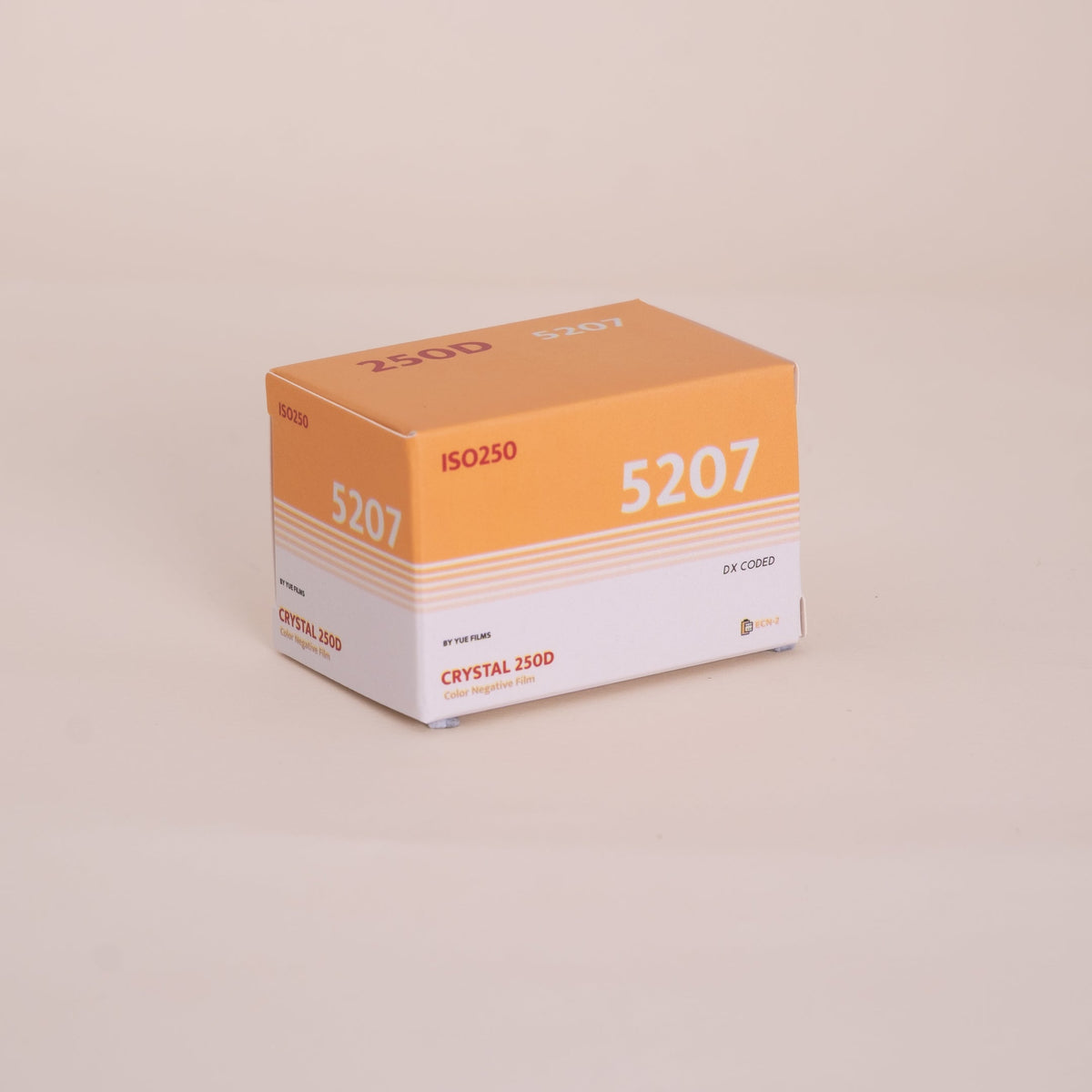
Irohas also lists Crystal 250D 5207 cinema film with ECN-2 processing instructions. Follow that product instruction rather than assuming that every 35mm cassette belongs in C-41.
Kodak Portra and Ilford XP2 Super
Portra is a C-41 colour negative film. It does not require ECN-2 because it is a professional film or because its colour rendering appeals to cinema photographers.
XP2 Super is another useful reminder to read the label. Its photographs are monochrome, but it is a C-41 film, not a traditional black-and-white processing stock.
Slide and Traditional Black-and-White Film
Kodak Ektachrome and Fujifilm Velvia are examples of slide films normally processed in E-6. HP5 Plus and Delta films use traditional black-and-white processing. Neither category should be forced into an ECN-2-versus-C-41 choice.
What Happens If the Wrong Process Is Used?
There are two separate concerns: equipment contamination and image changes. Traditional remjet-backed film can contaminate a standard C-41 machine, chemistry and other film if the backing is not handled correctly. It can also require significant cleaning. Tell the lab about the stock before it enters a processor.
That risk is serious without claiming that every affected roll will inevitably be destroyed. The outcome depends on the equipment, film and handling. The practical instruction is simple: never submit an uncertain remjet-backed roll as an ordinary C-41 order.
Cross-processing is a different question. A film can sometimes form an image in chemistry other than its intended process, but colour balance, contrast, density and consistency may change. The existence of an image does not establish that the process was appropriate or that the negative meets its intended specifications.
There is no universal rule that ECN-2 film cross-processed in C-41 becomes orange, or that C-41 film in ECN-2 becomes cool. Results depend on the emulsion, exposure, chemistry and scan. Any intentional cross-processing should be discussed with the lab first. Do not assume it is part of the standard service.
Scanning and Colour: What You Can Reasonably Expect
Motion-picture negative films are designed for a production and post-production chain, and their contrast characteristics can differ from still-photography stocks. But the delivered scan is also an interpretation of the negative. Scanner settings, colour correction and the requested output influence the finished file.
A C-41 scan is not automatically punchy or finished, and an ECN-2 scan is not automatically flat or unusable without grading. Neither process alone guarantees warmer colour, greater dynamic range or better shadow recovery. Compare specific films and workflows rather than treating the process name as a preset.
Exposure still matters. Scanning can make recorded information more usable, but it cannot reconstruct subject detail that was never captured. If you want a particular colour treatment or editing latitude, explain the intended use when discussing scans.
Every Irohas Dev + Scan order includes high-resolution Noritsu scanning. The published 4011 × 6048-pixel, approximately 24 MP specification applies to 35mm full-frame output; 120 and other formats vary. TIFF is an optional A$8 per roll. Our JPEG versus TIFF scan guide explains file choice without equating a file extension with extra captured detail.
Getting ECN-2 or C-41 Film Developed at Irohas
Our developing and scanning services cover C-41, traditional black & white, ECN-2 and E-6 on Noritsu processing equipment. Choose Dev only if you do not need digital files, or Dev + Scan if you want scans included.
The published ECN-2 estimate is 3–5 business days in Melbourne and Sydney, or 7 business days in Perth. This is different from another lab's lead time and should not be replaced with a generic 10–15-day claim. For C-41, same-day service before 3 pm or next-day completion is subject to your receiving lab's availability. Confirm timing for your order, especially before a deadline.
To mail your film to Irohas, choose Melbourne, Sydney or Perth in the order form and post to that lab's matching address. Include your order number and identify any unfamiliar stock. We send the payment link after receiving and checking your rolls; scanning orders receive a download link after completion and payment confirmation.
Keep the film protected. Give us the stock information. We will help you choose the appropriate service before the roll enters processing.
Frequently Asked Questions
Can a film without remjet still need ECN-2?
Yes. Kodak's VISION3 AHU camera-negative films use a remjet-free structure but remain designed for the motion-picture negative workflow. Absence of remjet does not establish C-41 compatibility.
Does Kodak Portra 160 use C-41 or ECN-2?
Portra 160 uses C-41. Follow the process marked on the packaging, not an association with professional or cinema-style photography.
Should I open a mystery roll to read its edge markings?
No. Keep unprocessed film protected from light. Photograph the closed container and share its history with the lab. Do not unwind it, inspect it against a light or perform a backing-removal test yourself.
Can I choose ECN-2 just to get a cinematic look?
Match the process to the film first. Colour, contrast and halation depend on the stock, exposure and finishing workflow. A process name is not a guarantee of a particular aesthetic.
Can C-41 and ECN-2 film be developed at the same price?
They have different Irohas prices: C-41 Dev + Scan is A$17 and ECN-2 Dev + Scan is A$18 per roll. Dev only is A$11 and A$15 respectively. These are Irohas prices, not Australian market averages.
Is E-6 another name for ECN-2?
No. E-6 is used for colour reversal film and produces a positive transparency. ECN-2 is a motion-picture colour negative process. The similar-looking names do not make the processes interchangeable.


