

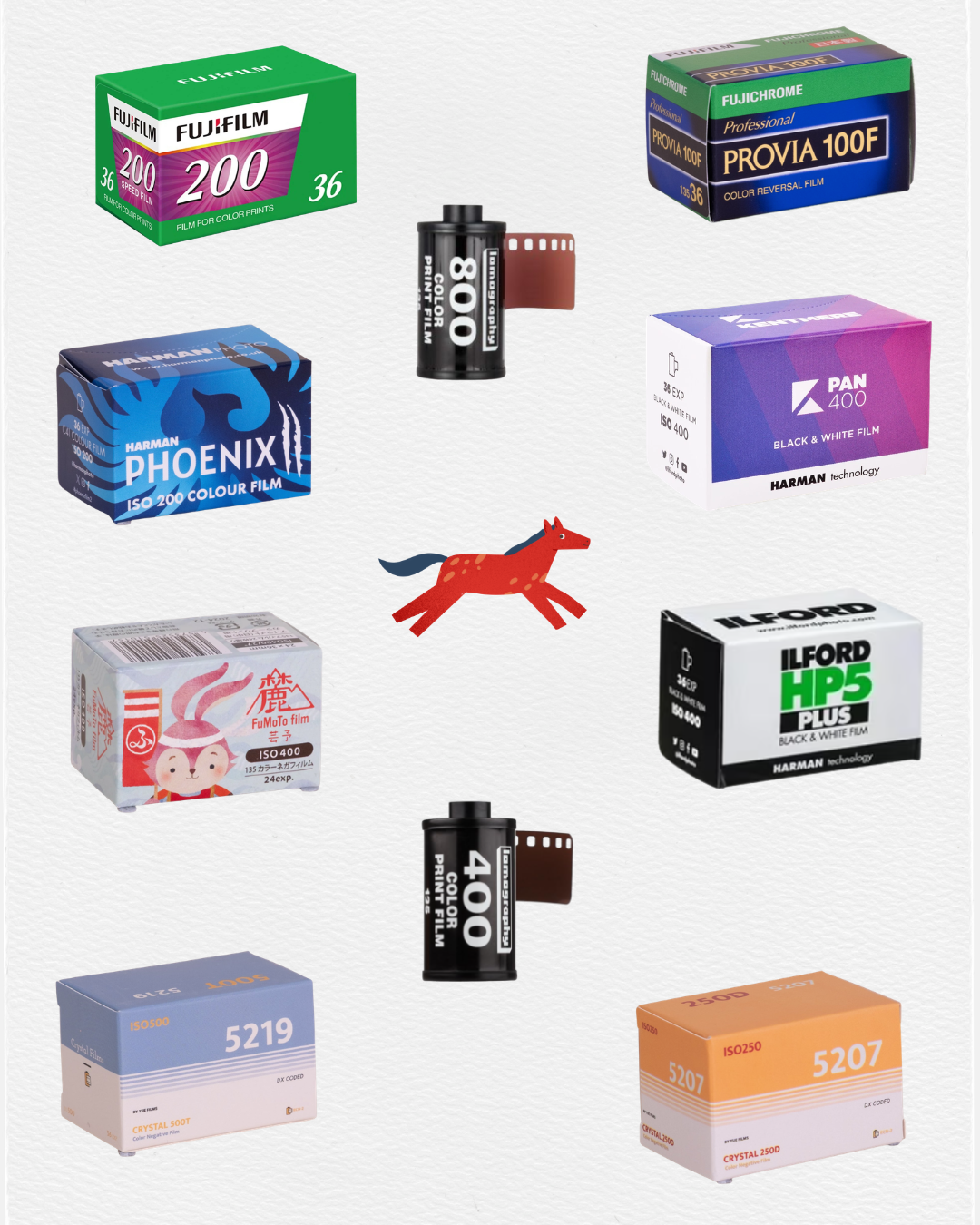
So you've picked up a film camera — maybe a thrifted Canon AE-1 from a market stall, maybe your parents' old Olympus from the back of a cupboard. Now comes the fun part: choosing your first roll of 35mm film.
Here's the thing nobody tells you upfront: the wrong film for your conditions won't ruin your photos outright, but it will give you 36 frames of underexposed, washed-out guesswork — and a 3–7 day wait before you find out. Getting the film right from the start means you actually enjoy the results instead of wondering where it went wrong.
This guide from Irohas Photo breaks down everything you need to know about picking the best 35mm film in Australia, whether you're shooting sun-drenched beaches or moody black and white portraits.
Why 35mm Film Is Having a Comeback in Australia

Film photography isn't just nostalgia — it's a genuine creative choice. Across Australia, more photographers (especially under 30) are reaching for analogue cameras. Film sales have climbed steadily since 2020, and new labs are popping up in cities from Sydney to Perth.
Why? Part of it is the look. Film renders colour, grain, and light in a way that digital sensors simply can't replicate. Part of it is the process — slowing down, thinking about each frame, and waiting for results. In a world of infinite phone snaps, there's something deeply satisfying about a roll of 36 carefully composed shots.
And honestly, the Australian landscape just looks incredible on film. Golden hour at Bondi, misty mornings in the Blue Mountains, the harsh midday sun of the outback — film handles all of it with character that feels unmistakably real.
Who Is This Guide For?
This guide is written for complete beginners. If you've never bought a roll of 35mm film before, or you've shot one roll and want to try something different, you're in the right place. We'll keep the technical jargon to a minimum and focus on practical advice that actually helps you make a choice.
How to Choose a 35mm Film (4 Key Factors)

Before we get into specific recommendations, here are the four things worth considering when you're choosing a 35mm film for beginners.
ISO / Speed
ISO (sometimes called ASA on older cameras) tells you how sensitive the film is to light. The two most common speeds you'll encounter are:
ISO 200 — Best for bright, outdoor conditions. Think daytime beach trips, sunny park hangs, and well-lit street scenes.
ISO 400 — More versatile. Handles overcast days, shade, and indoor shooting much better than 200-speed film.
As a beginner, ISO 400 is generally the safer pick because it works in more situations. But if you mostly shoot outdoors in Australian sunshine, ISO 200 will give you slightly finer grain and beautiful results.

Colour vs Black & White
Colour film (also called colour negative or C-41) is where most beginners start, and for good reason — it's forgiving, widely available, and easy to get developed at almost any lab.
Black and white film has its own magic. It strips away colour distractions and puts all the emphasis on light, shadow, and composition. It's brilliant for portraits, architecture, and moody street photography. Just note that some labs charge a bit more for B&W processing.

Budget
Film prices in Australia have gone up in recent years, but there are still genuinely good options under $15 a roll. Don't assume expensive means better — some of the most iconic photographs in history were shot on cheap consumer film.
A good strategy for beginners: start with a budget-friendly stock, learn how it behaves, then experiment from there.

Where You're Shooting (Indoor / Outdoor / Low Light)
Your shooting environment matters more than you might think:
Bright outdoors — ISO 200 colour film is perfect. You'll get rich saturation and fine grain.
Overcast or mixed conditions — ISO 400 gives you the flexibility to keep shooting when clouds roll in.
Indoors or low light — You'll want ISO 400 at minimum. Pair it with a lens that opens up to f/2.8 or wider, and you'll be surprised how much you can capture without a flash.
Best Colour Films for Beginners
These are the colour films we recommend most for anyone starting out with 35mm in Australia. Each one is widely available, affordable, and forgiving enough to produce great results even if your exposure isn't spot on.
Irohas Straya 400 — Our Pick for Australia

If you're shooting in Australia, start here. Irohas Straya 400 is Irohas Photo's own house-brand film — designed and calibrated specifically for Australian shooting conditions, not optimised for northern hemisphere light and then shipped here as an afterthought.
What does that mean in practice? The colour science is tuned to handle Australia's intense sunlight and warm golden tones. You get rich, vibrant colours that feel distinctly Australian — think saturated skies, warm skin tones, and that unmistakable late-afternoon glow that makes this country so photogenic. At ISO 400, it's versatile enough for everything from beach days to indoor gatherings.
What makes Straya 400 genuinely different isn't just the specs — it's the intent. European and American film stocks are colour-graded for European and American light. Straya is calibrated for the same harsh midday sun you'll find on a summer street in Newtown or a coastal walk in Fremantle.

Kodak Gold 200 — Best All-Rounder
Kodak Gold 200 is the film that's launched a thousand film photography obsessions. It delivers warm, slightly golden tones with pleasant grain — exactly what most people picture when they think of "the film look."
It's at its best in daylight. Load it up for a weekend road trip, a day at the markets, or golden hour at the beach. The colours are vibrant without being over the top, and it handles slight overexposure beautifully — handy when you're still learning.

Kodak ColorPlus 200 — Best Budget Option
If you want to shoot lots of film without worrying about cost, Kodak ColorPlus 200 is your friend. It's one of the most affordable colour negative films on the market, and the results are genuinely impressive for the price.
Colours lean slightly warm with a natural, unprocessed feel. It doesn't have quite the same punch as Gold 200, but many photographers actually prefer its more subtle palette. It's a fantastic "learning film" — buy a few rolls, experiment freely, and don't stress about wasting frames.

Kodak Ultramax 400 — Best for Versatility

Kodak Ultramax 400 is the film to grab when you're not sure what you'll be shooting. Its ISO 400 speed means it handles a wider range of lighting conditions — from bright sunshine to overcast afternoons to dimly lit cafés.
Colours are punchy and saturated with noticeable but pleasing grain. Blues and reds really pop, which makes it a favourite for street photography and candid portraits. If you're only going to buy one roll to test the waters, this is a strong contender.
Fujifilm FUJICOLOR C200 — Best Everyday Film

Fujifilm FUJICOLOR C200 offers a distinctly different colour palette from the Kodak options. Where Kodak leans warm and golden, Fuji tends toward cooler tones — greens are lush, blues are deep, and skin tones sit in a natural, neutral range.
It's a beautifully clean film at ISO 200, with fine grain that gives images a smooth, polished feel. If you're drawn to the cooler, more natural end of the colour spectrum, this is the film to try.
Best Black & White Films for Beginners
Black and white film has a timeless quality that colour simply can't replicate. These three options are all excellent starting points, each with a slightly different character.
Ilford HP5 Plus 400 — The Classic Choice

Ilford HP5 Plus 400 is probably the most recommended black and white film in the world, and for good reason. It's incredibly forgiving — you can overexpose it, underexpose it, even push it to ISO 1600 in development, and it still delivers usable results.
The grain is visible and characterful, giving images a classic photojournalistic feel. Contrast is moderate, which means you retain detail in both highlights and shadows. If you're shooting B&W for the first time, start here.

Kodak T-Max 400 — Sharpest B&W

Kodak T-Max 400 uses Kodak's T-grain technology, which produces noticeably finer grain than traditional B&W films. The result is sharper, more detailed images with a modern, clean feel.
It's a bit less forgiving than HP5 when it comes to exposure mistakes, so it rewards a more careful approach. But when you nail it, the results are stunning — beautifully smooth tonal gradations with razor-sharp detail.

Ilford Delta 400 — Best for Portraits

Ilford Delta 400 sits somewhere between HP5 and T-Max in character. It uses core-shell crystal technology that delivers finer grain than HP5 while maintaining beautiful tonal range.
Where Delta 400 really shines is in portraits. Skin tones render with a lovely smoothness, and the film handles the transition from light to shadow with real elegance.
Where to Buy 35mm Film in Australia
Finding 35mm film in Australia has gotten easier as the analogue revival has grown. You've got a few options:
Online specialist retailers — The most reliable way to get exactly what you want. Irohas Photo stocks a curated range of the most popular 35mm films — including every film mentioned in this guide — and ships Australia-wide.
Camera stores — Shops like Camera House, DigiDirect, and independent camera stores in major cities often carry a selection of popular film stocks.
Pharmacies and supermarkets — Some Chemist Warehouse and Officeworks locations still stock Kodak Gold and ColorPlus, though availability is hit and miss.
Our tip: buying from a dedicated film retailer like Irohas Photo means you know the film has been stored properly. Film is sensitive to heat — and with Australian summers, that matters more than you'd think.
Where to Get Your 35mm Film Developed in Australia
If you're not near a major city, you can still access professional C-41 and B&W processing — Irohas Photo accepts exposed rolls from anywhere in Australia. The postal drop-off guide covers everything you need to know about packaging, turnaround times, and how to post your rolls directly to the lab safely.
Sydney shooters have the convenience of dropping off in person for same-week turnaround. Whether you've just finished a roll of Kodak Gold 200 or you're curious how Irohas Straya 400 renders the city's harbour light, Irohas Photo's Sydney darkroom handles C-41 colour and black-and-white processing on-site.
Melbourne's flat, overcast light pairs beautifully with a slower ISO — Ilford HP5 pushed to 800 or Kodak Ultramax 400 both reward careful scanning. If you're based in Victoria, the Melbourne studio location offers walk-in drop-off and professional wet-lab processing without waiting on a courier.
From standard C-41 development to push-processing and high-resolution scanning, the right lab makes a real difference to how your negatives come out. Browse the full range of processing options at Irohas Photo to find the service that suits your film stock, shooting style, and budget.

You've shot your first roll — now what? Getting your film developed (also called processing) is the next step, and choosing the right lab makes a real difference to your results.
What to Look for in a Film Lab
- Professional equipment — High-quality minilab processors like the Noritsu V50 deliver consistent, well-calibrated results.
- Quality chemistry — Fresh chemistry matters. Old or contaminated chemistry can affect colour accuracy and contrast.
- Digital scanning — Most people want their developed negatives scanned to digital files. Look for a lab that offers high-resolution scans, not just thumbnail previews.
- Transparent turnaround times — Know when to expect your results. Same-day options are available at select labs.

Irohas Photo has three dedicated labs across Australia offering professional film processing services with same-day options for drop-offs.
Why Same-Day Processing Matters
For many photographers, waiting days or weeks to see your results is part of the experience. But there are times — an event, a trip, a project with a deadline — when same-day developing is genuinely valuable.
Irohas Photo's Melbourne, Sydney, and Perth labs can process your C-41 colour negative film the same day when you drop it off. Shoot in the morning, have digital scans by evening.
FAQs
How much does it cost to develop 35mm film in Australia?
Prices vary by lab and service level. Developing without scanning is typically the most affordable option, while develop-and-scan packages cost more depending on scan resolution and number of frames. Check the Irohas Photo processing page for current pricing — generally expect to pay from AUD $15 upwards for a standard develop-and-scan service.
How long does film development take?
Irohas Photo offers same-day C-41 processing at all three locations — Melbourne (McKillop St), Sydney (Haymarket), and Perth (St Georges Tce). Mail-in orders from anywhere in Australia are typically processed within a few business days of receipt.
Can I shoot expired film?
Yes! Expired film can produce beautiful results — often with shifted colours, increased grain, and a dreamy, unpredictable quality that many photographers love. As a general rule, rate expired film at half its original ISO for every decade past expiry. Results vary, so treat it as an experiment rather than a reliable workflow.

Ready to start shooting?
Browse our full range of 35mm film — including Kodak, Fujifilm, Ilford, and our own Irohas Straya 400. When your roll is finished, drop off or mail to any of our three Australian labs.


